



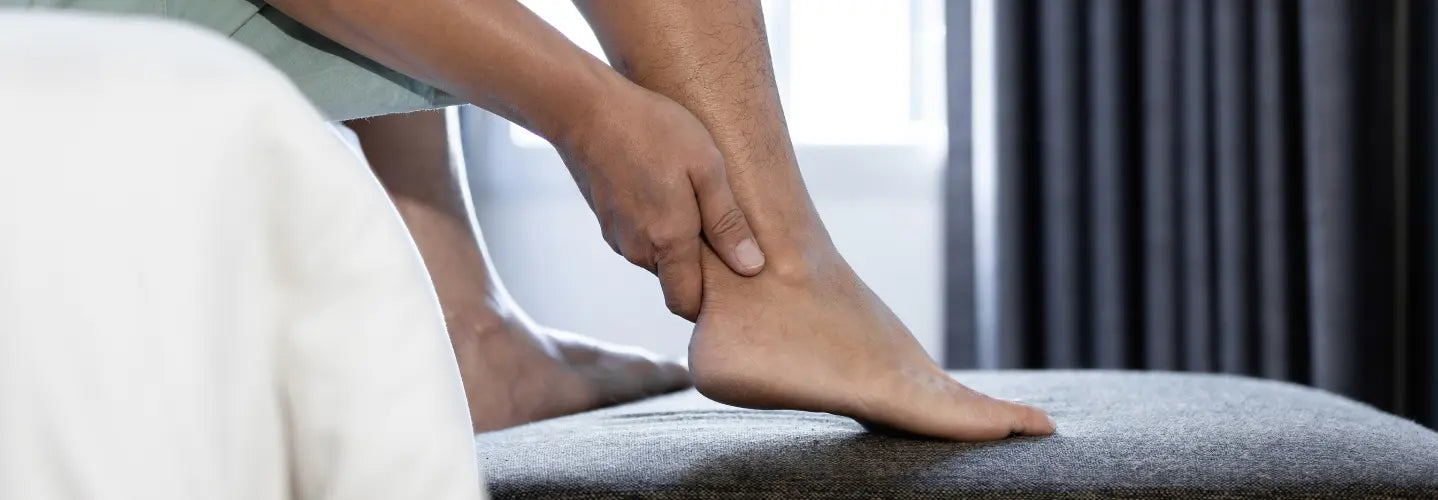
Bioptron Light Therapy for Achilles Tendon Pain: Where It May Fit Around Rehab

Achilles pain can be confusing because how it feels today does not always match what you asked it to do this week. You might wake up feeling better, even after adding more running, more hills, heavier calf work, longer days on your feet, or several busy days in a row.
That is why one pain score is never the whole story. With Achilles pain, it helps to look at the full week of walking, work, rehab, running and sport.
Direct answer: For ongoing pain in the middle part of the Achilles tendon that has been properly assessed, progressive tendon-loading exercise remains the main part of rehab. Bioptron may still be considered as a light-based recovery-support routine around that plan. The 2024 APTA/JOSPT guideline says clinicians should not use low-level laser therapy for midportion Achilles tendinopathy, and research on laser and other light therapy remains mixed. Those studies do not show that Bioptron heals an Achilles tendon. They also did not test Bioptron itself, so the findings should not be copied across as if every light device were the same.
The practical question is simpler: can Bioptron fit into your recovery routine without taking over the rehab decisions? For someone who already has an assessed plan and wants a convenient, non-invasive home light routine, that can be a sensible reason to explore Bioptron.
The tendon remembers the week, not just today
Your Achilles does not only experience the 30 minutes you spend doing rehab. It also deals with your walking, stairs, work, gym sessions, running, sport and sudden changes in activity.
A simple seven-day Tendon Load Ledger can help you and your clinician see the bigger picture. It is not a programme and it does not tell you when to progress. It simply records what happened.
| Day | What loaded the Achilles? | What happened during activity? | How did it feel later or next day? |
|---|---|---|---|
| Day 1 | Walking, stairs, standing, calf work, running or sport | Note anything unusual | Note the later or next-day response |
| Day 2 | Walking, stairs, standing, calf work, running or sport | Note anything unusual | Note the later or next-day response |
| Day 3 | Walking, stairs, standing, calf work, running or sport | Note anything unusual | Note the later or next-day response |
| Day 4 | Walking, stairs, standing, calf work, running or sport | Note anything unusual | Note the later or next-day response |
| Day 5 | Walking, stairs, standing, calf work, running or sport | Note anything unusual | Note the later or next-day response |
| Day 6 | Walking, stairs, standing, calf work, running or sport | Note anything unusual | Note the later or next-day response |
| Day 7 | Walking, stairs, standing, calf work, running or sport | Note anything unusual | Note the later or next-day response |
Include things such as running distance, hills, faster running, jumping, sport, heavier calf raises, extra repetitions, long periods standing and sudden jumps in training. A better morning can be encouraging, but it should still be viewed alongside the whole week.
Achilles tendon pain is not one problem
Not every sore Achilles is the same. That matters because advice for one type of problem should not automatically be used for another.
- Midportion Achilles tendinopathy usually refers to ongoing pain in the tendon above the heel.
- Insertional Achilles pain is closer to where the tendon joins the heel.
- An acute Achilles injury happens suddenly, often during a strong push-off, sprint or jump.
- A partial or complete rupture is a tendon tear and needs proper assessment.
The 2024 guideline used in this article is specifically about midportion Achilles tendinopathy. It should not be treated as a rulebook for every kind of Achilles pain.
What does the light-therapy research actually tell us?
This is where online advice can become unnecessarily complicated. There are studies on low-level laser and other forms of light therapy, but the devices and treatment methods are not all the same. Bioptron should not be treated as identical to them.
| Research | Plain-English takeaway |
|---|---|
| 2024 APTA/JOSPT guideline | Progressive tendon loading remains the main rehab approach for midportion Achilles tendinopathy. The guideline says clinicians should not use low-level laser therapy for this condition. |
| 2020 review of four laser studies | The review included 119 people and found that the evidence was too uncertain to support routine laser use for Achilles tendinopathy. |
| 2012 University of Otago trial | Forty people completed an exercise programme, with one group also receiving low-level laser. The laser group did not show a clear extra benefit on the main 12-week outcome. |
| 2025 trial in runners | Forty-six runners were studied. Adding photobiomodulation light therapy to exercise and pressure-wave treatment did not clearly outperform exercise alone at three months. |
What should a Bioptron customer take from this? The research does not give us a Bioptron-specific claim that it heals Achilles tendons. That is an important boundary, but it does not make a home light routine pointless. It means Bioptron is best considered as an adjunct around rehab, rather than as the rehab itself.
Bioptron NZ describes its devices as being used in home, clinic, physiotherapy and sports settings. If you want to understand the brand and technology further, see the Bioptron Hyperlight technology, Bioptron studies and sports medicine information.
Loading is the rehab anchor, while Bioptron can be the recovery-support routine
If you have assessed midportion Achilles tendinopathy, the exercise and loading plan remains the important part of rehabilitation. Your clinician may adjust that plan based on your symptoms, function, goals and response over time.
Where can Bioptron fit? For some people, its appeal is that it gives them a simple, non-invasive light routine at home that can sit around the work they are already doing. A Bioptron session does not need to become another workout or another way of testing the tendon.
That can make it a practical option for people who:
- already know what Achilles problem they are dealing with
- already have a rehab or load-management plan
- want an additional recovery-support routine at home
- prefer a non-invasive light-based option
- can use the device as directed without skipping their prescribed rehab
- understand that Bioptron does not replace physiotherapy or progressive loading
You can learn more about the wider Bioptron range and support available through Bioptron New Zealand.
The Bioptron Load-Decoupling Rule: A Better-Feeling Session Is Not a Green Light to Add Tendon Load
This sounds technical, but the rule is very simple: decide whether to use Bioptron and whether to increase rehab load as two separate things.
The Bioptron decision
Can you use the device exactly as directed, reach the area comfortably and fit the session into your normal recovery routine?
The rehab decision
Is your Achilles actually ready for more running, more calf loading, hills, speed, jumping or sport according to your established plan?
A Bioptron session may leave an area feeling more comfortable for some users, and results vary. But that better feeling is not permission on its own to:
- lift more weight in calf raises
- add more repetitions
- run farther
- add hills or speed work
- start jumping
- add another training session
- return to sport early
This separation is actually one of the most useful ways to include Bioptron in a sports recovery routine. You can have a recovery-support session without turning every change in comfort into a new training decision.
Where can a Bioptron session fit around Achilles rehab?
There is no need to make this complicated or choose a universal before-exercise or after-exercise rule. Instead, check whether the session fits your existing plan.
- Do you already have an assessed rehab plan? If yes, Bioptron can be considered around it rather than instead of it.
- Can you reach the back of the ankle comfortably? You should not have to twist, strain or hold an awkward position just to use the device.
- Can you use it without changing your prescribed exercises? The light session should not push the important rehab work aside.
- Can you keep comfort and load decisions separate? Feeling better after a session should not automatically mean doing more.
- Are symptoms getting worse despite the plan? If so, reassessment may be more useful than trying to train through it.
The best timing is the timing that fits the device instructions, your routine and your professional guidance. This article does not create a special Bioptron Achilles dose or schedule.
Choose the Bioptron setup that is easiest to position
For Achilles use, the practical difference between devices is mostly about how easily you can position the light around the back of the lower leg and ankle. That is where the two formats below may suit different people.
Bioptron MedAll
Bioptron MedAll is a compact, targeted Bioptron format designed for convenient use at home, in clinics and in sports or wellness settings. Its smaller format may appeal if you want a portable device that is easy to bring into a regular home routine.
Bioptron Pro 1 with floor stand
Bioptron Pro 1 with floor stand has an 11 cm treatment filter and an adjustable floor stand. The stand allows hands-free positioning, which may be useful if you want the device held steadily behind the ankle or lower leg without having to hold it throughout the session.
Neither model should be chosen because of a promise that it will heal the Achilles faster. Choose based on reach, comfort, portability, hands-free use and how easily the device can become part of a consistent routine.
Track rehab progress with the bigger picture, not one pain score
A useful recovery plan looks beyond how the Achilles feels immediately after one session. Better questions are about what you can do over time and how the tendon responds to the load already in your plan.
Useful things to keep an eye on may include:
- normal walking
- how prescribed calf exercises are going
- running that is already allowed in your plan
- how the Achilles feels later and the next day
- whether you are completing the rehab you were given
- changes in work, walking, gym or sport load
These are discussion points, not pass-or-fail tests. They should not be used to clear yourself for harder training or return to sport.
When Achilles pain needs assessment before any home light routine
Bioptron can be a convenient home recovery-support option, but it is not the first step when there may be a serious tendon injury.
Seek prompt professional assessment if you have:
- a sudden pop or snap
- marked weakness
- trouble pushing off normally when walking
- rapid swelling
- major bruising
- a sudden injury during running, jumping or sport
- a sudden loss of normal function
- symptoms that keep getting worse
- an Achilles diagnosis that is still uncertain
- any concern that the tendon may be torn
If you think you may have torn your Achilles, do not start with a home Bioptron routine. Get it assessed and follow the recommended care for that injury.
Frequently asked questions
Does Bioptron light therapy help Achilles tendon pain?
Bioptron may be considered as a recovery-support option around an assessed Achilles rehab plan. Direct Achilles-specific Bioptron evidence is not established, so it should not be presented as a proven way to heal the tendon or replace progressive loading.
Is light therapy recommended for Achilles tendinopathy?
The main recommended care for midportion Achilles tendinopathy is progressive tendon loading. The 2024 guideline advises clinicians not to use low-level laser therapy for this condition. Bioptron is a different light system, so if it is used, it is best considered as an adjunct around rehab.
Can Bioptron heal an Achilles tendon?
There is no evidence reviewed here that establishes Bioptron as a way to heal or repair an Achilles tendon. It may be considered to support comfort and recovery as part of a wider routine, with results varying from person to person.
Is Bioptron the same as the laser or PBM used in Achilles studies?
No. The Achilles studies used specific laser or photobiomodulation devices and treatment methods. Bioptron uses its own Hyperlight system, so those study results should not be copied directly across to Bioptron.
Should Bioptron be used before or after Achilles rehab exercises?
There is no universal before-or-after rule for Achilles rehab. Fit Bioptron around the plan in a way that is comfortable and follows the device instructions, without using the session to decide whether to increase tendon load.
Can I use Bioptron if I think I have torn my Achilles?
Do not begin a home Bioptron routine before assessment if you think the Achilles may be torn. A sudden pop, weakness, swelling, bruising or loss of normal push-off needs prompt professional assessment.
Can feeling better after a light session mean I can increase running or calf raises?
No. A better feeling after a session does not prove that the Achilles can safely handle more load. Changes to running, calf work, hills, speed, jumping or sport should follow the established rehab plan.
Which Bioptron setup is easier for the back of the ankle?
MedAll is compact and targeted, while Pro 1 with floor stand offers an adjustable hands-free setup with an 11 cm treatment filter. The better fit depends on how you prefer to position the device, not on one model having a better Achilles outcome.
Next step: see whether Bioptron fits your recovery routine
If your Achilles has been assessed and you already know what your rehab plan involves, Bioptron may be worth exploring as an additional home recovery-support routine. The key is to choose a setup you can use comfortably and consistently while keeping your loading decisions with the rehab plan.
If you are unsure which Bioptron device would be easiest to position around the ankle, or you want to understand how Bioptron could fit into your wider sports recovery routine, speak with the Bioptron NZ team.
Educational information only. This article does not diagnose Achilles pain or provide an individual rehabilitation programme. Results and suitability vary. If symptoms persist, worsen or the diagnosis is uncertain, speak with an appropriate health professional.
References
- Chimenti RL, Neville C, Houck J, Cuddeford T, Carreira D, Martin RL. Achilles Pain, Stiffness, and Muscle Power Deficits: Midportion Achilles Tendinopathy Revision 2024. Journal of Orthopaedic and Sports Physical Therapy. DOI 10.2519/jospt.2024.0302. View guideline.
- Martimbianco ALC, Ferreira RES, Latorraca COC, Bussadori SK, Pacheco RL, Riera R. Photobiomodulation with low-level laser therapy for treating Achilles tendinopathy: a systematic review and meta-analysis. Clinical Rehabilitation. 2020. PMID 32204620. View PubMed record.
- Tumilty S, McDonough S, Hurley DA, Baxter GD. Clinical effectiveness of low-level laser therapy as an adjunct to eccentric exercise for the treatment of Achilles tendinopathy: a randomised controlled trial. Archives of Physical Medicine and Rehabilitation. 2012. PMID 22541305. View PubMed record.
- Tenforde AS, Pham L, Gaudette LW, et al. Exercise, radial pressure waves, and photobiomodulation for management of non-insertional Achilles tendinopathy in runners: a three-arm non-blinded randomised control trial. BMJ Open Sport and Exercise Medicine. 2025. DOI 10.1136/bmjsem-2024-002442. View study.


