



Red Light Therapy vs TENS: Which Home Pain Tool Fits Which Job?

Two home pain tools can end up in the same drawer. One has wires and adhesive pads. The other delivers light. Both may be considered when pain or discomfort affects the day, yet they ask for different contact, sensation, placement, evidence and safety checks.
FRELLUX adds one more decision. It offers an LF Red Hyperlight route, an EF electro-frequency microcurrent route and a product-specific combined EF plus LF route. That makes the choice more useful, but only when each mode is treated as a separate job rather than as a longer feature list.
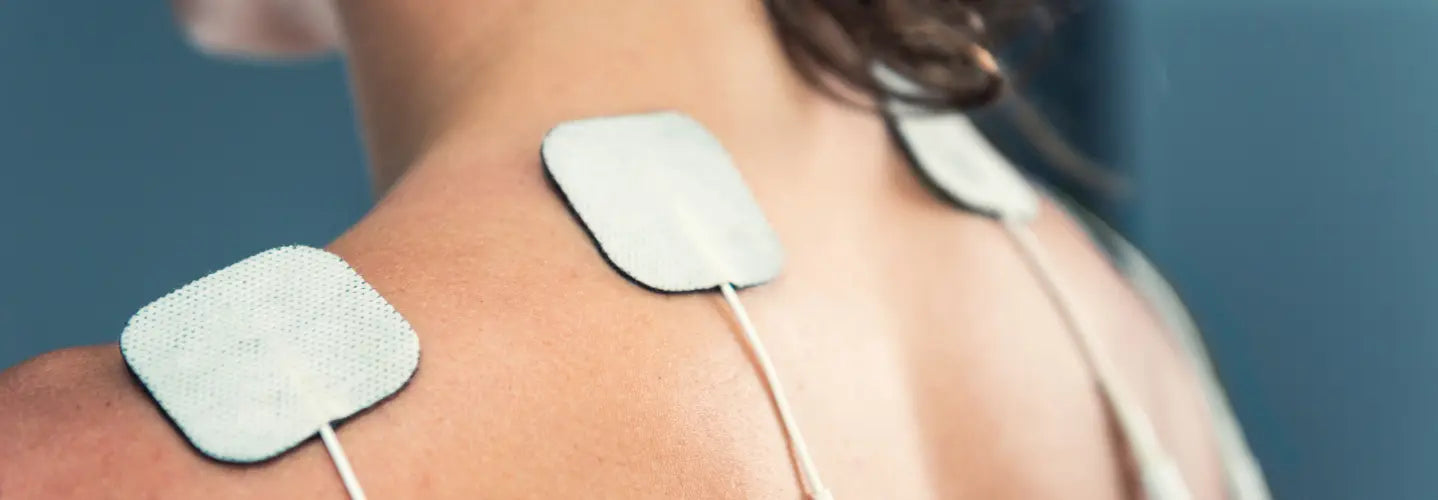
The practical answer: TENS and red light are different home-use pathways. Conventional TENS passes a weak electrical current through skin electrodes and is generally discussed as a temporary pain-relief tool. Red-light devices deliver optical energy through device-specific sources and protocols. Neither is universally better. The right fit depends on the job, diagnosis or care context, contact and sensation preferences, safety restrictions and evidence for the exact device. FRELLUX EF microcurrent is not conventional TENS, and FRELLUX must not be called a TENS machine.
Start with the job, not the product
Choose the statement closest to what you are actually trying to do:
- I want temporary sensory relief while managing a flare or activity.
- I want a light-only routine without adhesive TENS pads.
- I deliberately want contact microcurrent.
- I want light and microcurrent in one portable product.
- I do not know what is causing the pain and need assessment first.
This is a decision sorter, not a diagnostic tool. It cannot identify the cause of pain or decide whether a device is appropriate for your condition. For persistent pain, the Bioptron pain management information can help frame a discussion, but assessment and personal clinical advice still come first when the cause or risk is unclear.
Build the sensation-and-contact fork
The first useful comparison is not which device sounds more advanced. It is what must touch the skin, what you may notice and what setup you will repeat.
| Pathway | What touches the skin | What the user may notice | Main setup task |
|---|---|---|---|
| Conventional TENS | Adhesive electrodes connected by wires | An electrical tingling sensation that should not be painful | Prepare clean skin, position separate pads and adjust intensity according to the device guide |
| FRELLUX LF with EF off | The covered FRELLUX head is used over the intended area according to its current guide, with EF left at zero | Light and a programme-dependent feel, without selecting microcurrent | Confirm EF is off, select the instructed light programme and keep the area accessible |
| FRELLUX EF | The product-specific contact grid | Adjustable electrical input through direct contact | Reach the area comfortably, start at the instructed setting and adjust only within the guide |
| FRELLUX EF plus LF | The same FRELLUX contact pathway used for its product-specific combined mode | Both selected inputs within one instructed routine | Deliberately select both modes only after checking that each mode is suitable on its own |
For a broader explanation of the light pathway, see how Bioptron Hyperlight therapy is described. The important point here is simpler: light-only use, contact microcurrent and pad-based TENS are not interchangeable routines.
Ask what outcome you are purchasing
Temporary pain modulation
This is the clearest conventional TENS job. The NHS describes TENS as providing temporary pain relief and notes that it does not work for everyone.1 That makes it a possible short-term sensory tool, not proof that the source of pain is improving.
A repeatable light-only routine
This route suits someone who deliberately wants optical input without adhesive TENS pads or EF microcurrent. Device selection still depends on the exact light source, programme, placement, instructions and evidence. The words red light alone do not define one standard protocol. Readers exploring the wider category can view the Bioptron Hyperlight range while keeping each device's instructions separate.
A contact microcurrent routine
This route is for a reader who actively wants direct contact and product-specific microcurrent. FRELLUX EF uses its own contact grid and adjustable settings. It should not be relabelled as conventional TENS simply because both involve electrical input.
A dual-technology routine
This route is not automatically the most complete or powerful choice. It is appropriate to consider only when the LF and EF jobs each make sense independently and both fit the same routine under current instructions.
Temporary comfort is not evidence that an underlying condition is changing. A home device cannot diagnose the cause of pain. A longer feature list is not evidence of a better fit, and results vary.
Pass the condition-specific evidence checkpoint
Before comparing brands or modes, ask three questions:
- Has the pain or condition been appropriately assessed?
- Does the evidence relate to this condition and this exact device?
- Is the expected outcome temporary comfort, function or a clinical result?
The NHS describes TENS as a possible source of temporary pain relief and says it does not work for everyone.1 NICE advises against offering TENS for chronic primary pain because its guideline committee found no evidence of benefit for that specific population.2 These statements concern different contexts. They should not be flattened into either TENS works for all pain or TENS never works.
No verified head-to-head evidence was identified in the sources reviewed for this article showing FRELLUX or Bioptron to be superior to TENS. Evidence for TENS, light or microcurrent cannot be transferred to another device unless the condition, source, settings, dose, placement and use protocol genuinely match. Readers who want to inspect the brand evidence library can review Bioptron studies and references.
Safety overlap and divergence
Safety is mode-specific. The current FRELLUX product page separates several EF and LF restrictions, while the downloadable guide also gives broader whole-device exclusions.34 Where those instructions are broader than the mode summary, follow the stricter current guidance and ask Bioptron or a qualified healthcare professional before use.
| Question | TENS | FRELLUX EF | FRELLUX LF |
|---|---|---|---|
| Pacemaker or implanted electrical device? | Do not use if you have a pacemaker. Check the exact TENS manual and professional advice for any implant. | Avoid with a pacemaker or implanted electrical or electronic medical device. | The downloadable guide lists electronic implants as a FRELLUX exclusion. Do not assume LF-only use is cleared. |
| Epilepsy or seizure history? | The NHS says not to use TENS with epilepsy. | The downloadable guide lists epilepsy as a FRELLUX exclusion, so EF should not be assumed suitable. | The current product page says to avoid LF with epilepsy or a history of seizures. |
| Pregnancy or breastfeeding? | Do not use during pregnancy unless a doctor or midwife advises it. | The product page says to avoid EF during pregnancy unless advised. The guide gives the broader instruction not to use FRELLUX during pregnancy or breastfeeding. | The guide gives the broader instruction not to use FRELLUX during pregnancy or breastfeeding. Seek clarification before considering LF. |
| Broken, irritated or infected skin? | Do not place pads on irritated, broken or infected skin. | Avoid EF on open wounds or inflamed, irritated or broken skin. | The guide excludes open wounds, active skin conditions and pathological skin lesions for FRELLUX use. |
| Numb skin or reduced sensation? | Do not use pads on numb skin. | A mode-specific numb-skin rule was not verified in the current online summary. Reduced sensation can make intensity and skin response harder to judge, so obtain advice first. | A mode-specific numb-skin rule was not verified. Reduced sensation can make warmth or skin response harder to monitor, so obtain advice first. |
| Photosensitivity? | This is not a light-specific TENS issue, but other device and medicine restrictions may still apply. | The guide lists photoallergy as a FRELLUX exclusion. Do not assume EF-only use is permitted without clarification. | Avoid LF with known photosensitivity or a light-sensitive condition. |
| Head, neck, eyes or chest placement? | Do not use on the neck, mouth or eyes, or across the chest and back at the same time. | Avoid EF directly on the head, front of the neck or along the spine. The guide also calls for extra care around the heart area. | Avoid the eyes and never look directly into the light. Use extra care around the head, neck and heart area and seek advice if unsure. |
| Water, sleep, driving or machinery? | Do not use in the bath or shower, while asleep, driving, or using tools or machinery. | Do not use with wet hands, in a damp environment or immersed in water. No separate sleep or driving rule was verified in the online guide, so use only when you can control placement and attention safely. | The same water restrictions apply. No separate sleep or driving rule was verified in the online guide, so do not use where safe control or attention is compromised. |
| Active bleeding, clotting or circulation concerns? | The NHS page used here does not give a specific rule. Check the exact TENS manual and obtain professional advice. | Avoid EF with active bleeding, haemorrhaging tendencies or blood-clotting disorders. The guide also lists certain circulatory disorders. | The guide lists circulatory disorders including thrombosis as a FRELLUX exclusion. Do not assume LF is suitable. |
This table is a screening aid, not the full manual. Current instructions supplied with the exact device take priority.
The FRELLUX Two-Switch Rule: Prove LF and EF Separately Before Selecting Both
Combined mode should not win merely because two technologies sound more comprehensive than one. Treat FRELLUX as two switches that must each earn a place in the routine.
Switch 1: Would LF Red Hyperlight be selected on its own?
Confirm all of the following:
- Light is deliberately wanted.
- EF will remain off.
- The intended area is accessible.
- LF restrictions have been checked.
- The selected programme follows the current instructions.
- Light-only use matches the job being solved.
Switch 2: Would EF electro-frequency microcurrent be selected on its own?
Confirm all of the following:
- Contact microcurrent is deliberately wanted.
- Electrical input and direct contact are acceptable.
- The intended area can be reached comfortably.
- Implanted-device, pregnancy, skin, circulation and placement restrictions have been checked.
- EF is understood as a product-specific microcurrent route, not conventional pad-based TENS.
Selecting both
Consider combined EF plus LF only when LF makes sense independently, EF makes sense independently, both are suitable under current instructions and both support the same clearly defined routine. Do not select combined mode merely because it sounds stronger.
FRELLUX can deliver LF and EF through one product-specific combined mode. That does not make FRELLUX a TENS machine, and it does not establish that separate TENS and red-light devices can be stacked using the same instructions.
Require a buying receipt
Before checkout, finish one sentence. A clear reason is a better buying receipt than a list of features.
- TENS receipt: I want temporary electrical sensory input through adhesive pads and understand the placement, intensity and safety requirements.
- FRELLUX LF receipt: I want portable Red Hyperlight without selecting EF microcurrent.
- FRELLUX EF receipt: I deliberately want contact microcurrent, can reach the intended area and meet the EF restrictions.
- FRELLUX combined receipt: LF and EF each make sense independently and both are suitable under current instructions.
- Positioned-light receipt: I actually need hands-free, non-contact or stand-supported light. In that case, use the FRELLUX versus full-size Bioptron guide rather than forcing a handheld answer.
- Assessment receipt: The pain is unexplained, severe, changing, persistent or associated with concerning symptoms, so assessment comes before purchase.
Can TENS and red light be combined?
FRELLUX includes a product-specific combined EF plus LF route. That tells us only how FRELLUX is designed to use its own two modes. It does not prove that a separate TENS machine and a separate red-light device should be used together.
Do not create a simultaneous-use or stacking protocol from this comparison. The manuals for both devices and guidance from a qualified healthcare professional take priority. Before any clinician-approved combination, the relevant questions include:
- Where will the electrodes and light be placed?
- Could adhesive, contact or repeated sessions irritate the skin?
- What is the total session burden?
- Do implanted-device or neurological restrictions apply?
- Has the condition been assessed?
- Has a clinician recommended the combination for this person and context?
When consultation comes before checkout
Seek assessment before choosing a home device when pain is unexplained, severe, rapidly changing, follows significant injury, persists without a clear plan or comes with concerning new symptoms. A device comparison should not delay timely medical care.
Consultation is also the sensible next step when you have an implant, epilepsy or seizure history, pregnancy, photosensitivity, active skin problems, circulation or clotting concerns, reduced sensation, complex medicines, or uncertainty about placement. A suitability discussion can clarify which route should be rejected as well as which one may fit.
Decide by friction, not feature count
Four final questions usually reveal the practical answer:
- Will adhesive pads and wires be used consistently?
- Is electrical tingling wanted or avoided?
- Can the intended area be reached safely?
- Am I buying a needed mode or collecting features I may not use?
For the right reader, FRELLUX offers a portable choice between LF, EF and a product-specific combined route. The decision still begins with suitability, not novelty. Review the current instructions, define the job and reject any mode that does not earn its place.
Frequently asked questions
Is red light therapy the same as TENS?
No. TENS sends a weak electrical current through adhesive skin electrodes and is commonly used as a temporary pain-relief tool. Red-light devices deliver optical energy through a device-specific source and protocol. Their contact, sensation, restrictions and evidence are different, so the terms should not be used interchangeably.
Which is better for pain, TENS or red light therapy?
Neither is universally better. TENS may fit a goal of temporary electrical sensory relief, while a light device may fit a deliberate light-only routine. The better choice depends on the assessed condition, intended outcome, exact device evidence, placement, contact preference, sensation preference and safety restrictions.
Does TENS only provide temporary relief?
The NHS describes TENS as providing temporary pain relief and notes that it does not work for everyone. That means a comfortable session should not be treated as evidence that an underlying condition is improving. Use TENS only for an appropriate, assessed context and follow the exact device instructions.
Can red light therapy and TENS be used together?
Do not assume they can be stacked. A separate TENS machine and red-light device have different manuals, placement rules and restrictions. No simultaneous-use protocol is provided here. A qualified healthcare professional should consider the condition, electrode and light placement, skin response, total session burden and device-specific contraindications.
Is FRELLUX a TENS machine?
No. FRELLUX EF is a product-specific electro-frequency microcurrent route delivered through its contact grid. Conventional TENS typically uses separate adhesive electrodes and wires. FRELLUX also has LF Red Hyperlight and a combined EF plus LF mode, but those features do not turn it into a TENS machine.
What is the difference between TENS and microcurrent?
Conventional TENS uses pad-based electrical stimulation that is usually adjusted until a clear but comfortable tingling is felt. Microcurrent is a different electrical category with device-specific outputs and contact methods. FRELLUX EF uses its own adjustable contact grid, so TENS evidence and instructions cannot simply be transferred to it.
Which option avoids sticky pads and electrical tingling?
A deliberately selected light-only route avoids conventional TENS pads and its expected electrical tingling. With FRELLUX, that means using LF while EF remains off, exactly as the current guide directs. Suitability still depends on light-specific restrictions, safe access to the area and the exact programme instructions.
Can someone with a pacemaker use TENS or FRELLUX?
The NHS says not to use TENS with a pacemaker. The FRELLUX product page says to avoid EF with a pacemaker or implanted electrical or electronic device, and its downloadable guide gives a broader implant exclusion. Do not assume LF-only use is permitted. Seek manufacturer and clinical advice.
Does FRELLUX combined mode mean any TENS and red-light devices can be stacked?
No. FRELLUX combined mode is an instruction for one product that contains its own EF and LF pathways. It does not validate simultaneous use of a separate TENS machine and separate light device. Their manuals, restrictions, placements and professional guidance remain separate and take priority.
When should pain be assessed before choosing a home device?
Assessment should come first when pain is unexplained, severe, changing, persistent, follows significant injury or comes with concerning new symptoms. It is also important when implants, pregnancy, seizures, photosensitivity, skin problems, reduced sensation, circulation concerns or uncertainty about safe placement may affect device suitability.
References
- NHS: TENS, transcutaneous electrical nerve stimulation
- NICE NG193: Chronic pain recommendations
- Bioptron New Zealand: FRELLUX product page
- Zepter FRELLUX AP-001 beginner guide and FAQ
This article is general educational information, not medical advice. Follow the current manual supplied with the exact device and seek advice from a qualified healthcare professional for persistent pain, medical conditions or suitability questions.


