



Can Light Therapy Help Mouth Ulcers? What Does the Scientific Evidence Say?

Searching for mouth-ulcer remedies brings up studies of ordinary aphthous ulcers, herpes cold sores and cancer-treatment-related mouth inflammation. These are different conditions, which matters when considering light therapy for mouth ulcers.
For recurring aphthous ulcers, selected forms of professionally delivered low-level laser therapy have shown promising results for pain relief and healing time. But those findings do not prove that every red light device will work in the same way. That includes our Swiss-made BIOPTRON MedAll, the compact Hyperlight device we offer in New Zealand. The research is worth understanding, including its limits.
First, which kind of mouth ulcer are we talking about?
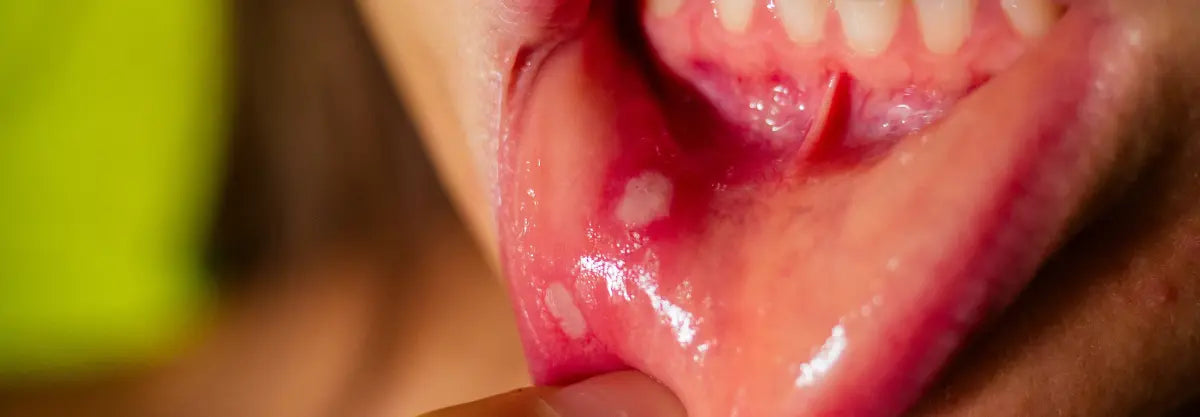
Common aphthous ulcers, sometimes called canker sores, appear on the soft lining inside your mouth, often on the cheeks or inner lips. With a pale centre and red edge, they can sting while you eat or brush your teeth. They are not contagious. When they recur, the condition is called recurrent aphthous stomatitis.
A sore caused by biting your cheek or rubbing against a sharp tooth is not necessarily an aphthous ulcer. Neither is a cold sore, which is linked to the herpes simplex virus and usually appears on or around the lips. We cover that separate subject in our cold-sore light therapy article.
Cancer-treatment-related oral mucositis is different again. Selected hospital photobiomodulation methods are recommended in some cancer-care settings, but not as home-device instructions for ordinary ulcers.
The research tells us more about pain than preventing another ulcer
What the 2025 laser reviews found
Researchers measure pain and healing separately. A sore may hurt less before it has fully healed.
A 2025 review by Ma and colleagues brought together 21 randomised trials involving 810 people with minor recurrent aphthous ulcers. Selected laser treatments reduced pain immediately and over the following one to three days. Pooled results also showed shorter healing times. The findings were less consistent for ulcer size and everyday functions such as eating.
Another 2025 review examined 14 trials involving 517 participants. It also found favourable pooled results for pain and healing time, but not a clear difference in ulcer size. Equipment and methods varied, and some trials may appear in both reviews. The participant counts should not be added together.
These are encouraging results for the clinical laser approaches tested. They are not a promise of a certain number of pain-free days, or proof that an ordinary LED lamp or BIOPTRON MedAll produces the same outcome.
What the 2026 umbrella review adds
An umbrella review published online in February 2026 looked across 41 earlier research reviews. It found support for low-level laser therapy and topical corticosteroids in reducing short-term pain and healing time in recurrent aphthous stomatitis. Evidence that light therapy prevents future ulcers was more limited.
This goes beyond isolated experiments, but 41 reviews are not 41 new trials. Some studies appear in multiple reviews. A separate 2026 overview also emphasised how much wavelength, equipment and delivered energy can vary in dental photobiomodulation research.
What our own BIOPTRON oral research actually involved
We value research testing BIOPTRON light itself, rather than borrowing claims from unrelated laser studies.
In a 2019 pilot study, 22 people with chronic oral mucosal pain received BIOPTRON light alongside their usual medicines. Researchers compared them with 22 patients drawn from earlier medical records who received medication without BIOPTRON. They had various conditions, including oral lichen planus and burning mouth syndrome.
Only four of the 22 BIOPTRON-treated people had chronic oral ulcerations. The study reported greater overall improvements in pain scores in the BIOPTRON-plus-medication group over four and eight weeks. That oral research is encouraging to us.
But this small pilot used a historical comparison group, not a randomised, sham-controlled design. The researchers could not establish a separate benefit for those four ulcer patients, and the findings do not identify ordinary recurring aphthous ulcers as a proven MedAll application.
There is another piece of our research story. In 2017, a study of 30 people with mixed chronic skin and mucosal ulcerative lesions reported improvements in several symptoms and lesion measurements during BIOPTRON light exposure. Again, it was not a MedAll trial for common mouth ulcers.
We value our polarised light technology's published research history. Explore our BIOPTRON studies library and see how it connects with our MedAll device. We would rather share the studies accurately than promise results they have not established.
Why a dental laser and BIOPTRON MedAll are not interchangeable
Dental laser studies specify a wavelength, energy dose and clinical method. Changing any of these can change the result. A red LED panel, a dental laser and our BIOPTRON Hyperlight system are not interchangeable simply because they all use light.
Our Swiss-made MedAll delivers polarised, polychromatic light across a 480 to 3400 nm spectrum without UV. It has greater than 95% polarisation within the specified 590 to 1550 nm range, an approximately 5 cm filter head and a built-in digital timer. Its compact design makes it an appealing choice when a targeted light therapy device is appropriate.
MedAll is listed as a Class IIa medical device for documented applications including certain wound-care, pain-management and dermatological uses. That classification is not proof for every condition. NZ intended-use information does not specifically list aphthous mouth ulcers.
We recommend exploring the MedAll range or our wider BIOPTRON Hyperlight collection for their verified features, not trying to recreate a dental laser protocol. There is no established self-use MedAll protocol for directing light inside the mouth for these ulcers.
When a mouth ulcer needs a dentist more than another product
Most uncomplicated ulcers heal within 10 to 14 days. Meanwhile, gentle brushing, salt-water rinses and avoiding spicy, acidic or very hot foods may ease discomfort. Your pharmacist can suggest suitable protective pastes or other options if needed.
If an ulcer is still there after three weeks, arrange a check with a dentist or healthcare professional. Get advice sooner if it looks unusual, bleeds unexpectedly, grows or changes, keeps returning, or makes eating and drinking difficult. Severe symptoms or a weakened immune system are also reasons to seek earlier help.
We would never suggest delaying that assessment while you consider buying a light therapy device.
Interested in MedAll? Here is what we would help you check
MedAll is a premium Swiss light system with clear specifications, portable design and documented intended uses. We think it is well worth exploring for its designed applications, rather than relying on vague claims about red light.
If mouth ulcers prompted your interest, start by finding out what is causing the sore with your dentist. Then check whether your planned application falls within MedAll's authorised instructions. We can explain MedAll's features, help compare models and discuss NZ support. Diagnosis and oral treatment questions belong with your clinician.
For a personal product discussion, get in touch with our NZ team. We want you to feel confident about what MedAll offers and clear about what the mouth-ulcer research does not yet show.
Common questions about light therapy for mouth ulcers
Can light therapy help ordinary mouth ulcers?
Some clinical studies of selected low-level laser therapy approaches have reported less pain and shorter healing times for recurrent aphthous ulcers. That is promising, but it does not apply automatically to every light therapy device. The wavelength, energy and clinical method matter, and results for BIOPTRON MedAll in ordinary aphthous ulcers have not been established.
Does low-level laser therapy make mouth ulcers heal faster?
Two 2025 reviews reported shorter healing times in pooled results from selected clinical laser trials. The studies used different lasers, methods and comparison treatments, so the size of the benefit is uncertain for any one person. These findings do not guarantee faster healing with a home red light device or BIOPTRON MedAll.
Can photobiomodulation prevent mouth ulcers from coming back?
There is less reliable evidence for preventing recurrence than for easing short-term pain or shortening healing time. A 2026 umbrella review of earlier research found that recurrence prevention remained uncertain. Repeated ulcers deserve a conversation with your dentist or healthcare professional to look for irritation or an underlying cause, rather than relying on light therapy alone.
Has BIOPTRON light itself been studied for oral ulcers?
Yes, BIOPTRON light has been studied in oral and mucosal research. A 2019 pilot involved chronic oral mucosal pain, including four people with chronic oral ulcerations, and a 2017 study included mixed chronic skin and mucosal lesions. Neither was a direct randomised trial showing that MedAll treats ordinary recurrent aphthous ulcers.
Can I use BIOPTRON MedAll inside my mouth?
We do not recommend directing MedAll inside your mouth to treat an ulcer. Its current verified New Zealand intended-use information does not establish an aphthous-ulcer indication or an intraoral self-use method. Ask a qualified dentist or healthcare professional about your sore, and confirm any proposed use against the manufacturer's current instructions before considering the device.
When should I see a dentist about a mouth ulcer?
Arrange an assessment if a mouth ulcer has not healed after three weeks. Seek help sooner if it is unusually large or painful, changes appearance, bleeds, keeps coming back or makes eating or drinking difficult. People with weakened immune systems or other concerning symptoms should get advice earlier. Most uncomplicated mouth ulcers settle within 10 to 14 days.
Explore BIOPTRON with the right expectations
Light therapy for mouth ulcers is a serious area of clinical research, with encouraging results from selected professional laser treatments. We are also pleased that BIOPTRON light has been investigated in published oral studies. That research is worth knowing about, even though it has not shown that MedAll treats common aphthous ulcers.
We offer a compact, Swiss-made Hyperlight device with clear specifications and verified intended uses. We would love to help you see whether MedAll suits your wider light therapy needs.
References
- Ma et al. (2025). Systematic review of laser therapy for minor recurrent aphthous ulcers. PubMed.
- Ullah et al. (2025). Laser therapy versus placebo for aphthous ulcers. PubMed.
- Al-Aizari et al. (2026). Umbrella review of recurrent aphthous stomatitis treatment. PubMed.
- Koth et al. (2026). Photobiomodulation for oral lesions. PubMed.
- Petruzzi et al. (2019). BIOPTRON light in chronic oral mucosal pain. PubMed.
- Aragona et al. (2017). Polarised light and chronic mucosal and skin lesions. PubMed.
- Health New Zealand. Mouth ulcers. Health NZ.
- MASCC/ISOO (2020). Clinical practice guidelines for cancer-related mucositis. PMC.


