



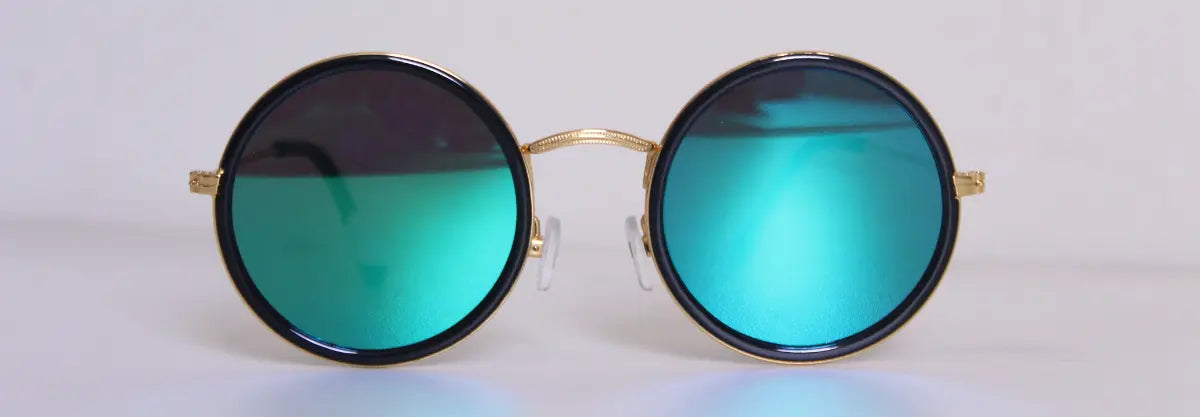
Photochromic Lenses vs Blue Light Filtering Glasses: Which Should You Choose?

Two pairs of glasses can look similar and do very different jobs. One may darken when you step into sunshine. The other may filter certain colours of light without changing tint at all. That is the key difference in photochromic vs blue light glasses.
Photochromic lenses respond to light, usually ultraviolet (UV), by changing their tint. Blue-light filtering lenses are designed to reduce the amount of selected blue-violet wavelengths passing through. Some glasses combine both features, but one does not automatically include the other.
If you're more interested in specialised light filtering glasses than automatic darkening, our Hyperlight Eyewear collection is worth exploring. We offer Indoor, Outdoor and Indoor/Outdoor designs. The details behind those names are what really count.
Photochromic vs blue light glasses: the difference you can actually see
Photochromic lenses change their tint
Photochromic lenses contain light-responsive materials that change how much visible light passes through. Many conventional versions react mainly to UV in sunlight, becoming darker outdoors and lighter again inside. That's why they're often called transition glasses or light-adaptive glasses.
They can be convenient if you want fewer changes between everyday glasses and sunglasses. But not every photochromic lens reaches the same darkness, clears completely indoors or reacts at the same speed. Temperature, lens design and the light around you all affect its behaviour. Even within this category, the actual specification matters more than the name.
Blue-light filtering lenses change what passes through
Blue-light filtering is about wavelengths, not automatic tint changes. These lenses are made to reduce transmission of some short-wavelength visible light, often in the blue-violet range. The amount filtered varies considerably between products.
Some look almost clear; others have a noticeable colour. A golden, green or neutral-looking lens is not necessarily photochromic, and a visible tint alone does not tell you how much blue light passes through. You need to look at what the particular lens is designed to do.
A car windscreen shows why the difference matters
A useful test of the two ideas is what happens behind a car windscreen. Standard photochromic lenses often rely on UV to activate, but a modern windscreen blocks much of that UV. The lenses may therefore remain relatively light, even when the day outside is brilliantly sunny.
Some specialised photochromic designs can respond to visible light too and may darken behind glass. That's why we wouldn't treat every pair of transition lenses as identical, particularly if driving is part of your day.
If you're choosing eyewear for driving, check the exact lens tint, light transmission and suitability for the conditions. Don't assume a pair will manage glare simply because it's labelled Indoor/Outdoor, and avoid tinted lenses that reduce visibility at night or in poor light.
Some lenses can do both. That doesn't make every lens the same.
There is a third possibility. A lens can be photochromic and have blue-light filtering built into its material or coatings. Some current optical designs combine automatic tint changes with a separate short-wavelength filtering feature.
Photochromic behaviour, blue-light filtering, UV protection, polarisation and anti-reflection are separate specifications. One feature doesn't promise the others.
So here's the more useful question: do you want a lens that physically adjusts its darkness as the light changes, or are you looking for a particular light-filtering design to wear in the places you spend time?
If it's the second, we'd love you to take a closer look at Hyperlight Eyewear NZ. Our range offers a different approach, with clearly identified wearing environments and a documented lens construction.
What Indoor and Indoor/Outdoor mean in our Hyperlight range
We offer Hyperlight Eyewear in designs labelled Indoor, Outdoor and Indoor/Outdoor. These names tell you where a model is intended to be worn. Indoor/Outdoor does not, on its own, mean that the lens automatically darkens in sunshine. We don't describe our Hyperlight models as photochromic because automatic tint-changing has not been established for these particular products.
What we can show you is the optical construction behind our range. Hyperlight lenses use CR39 optical material and Fullerene layers on both sides. Our lens design uses Fullerene technology to modify selected light wavelengths, rather than claiming a light-reactive tint. We also use an eight-layer Ioncoat K+ anti-reflection system to manage surface reflections.
Easy-clean hydro- and oleophobic coatings, an antistatic component and a surface-protecting Hard Coat round out the finish. We also offer different frame styles, so you can choose both the lens design and a look you like.
For an Indoor option, look at Astral Green Titanium
Our Astral Green Titanium is a unisex Indoor design with a titanium frame. Its published 48 × 18 × 145 mm dimensions give you a useful starting point when thinking about fit. It brings our Hyperlight lens construction into a distinctive frame designed for indoor wear.
It's an appealing place to start if most of your day is indoors.
For mixed environments, explore Aviator 2 Green
Our Aviator 2 Green is a unisex Indoor/Outdoor model with an aviator-style frame, green rims and warm amber-toned lenses. We particularly like it for anyone attracted to a single style that we specifically offer for both indoor and outdoor settings.
It has the same documented Hyperlight lens features, but its Indoor/Outdoor label is about intended use, not self-darkening. If you prefer a different frame shape, our Rio Havana Indoor/Outdoor is another option to view.
Our labels make it easier to choose confidently.
Which feature matters most when you choose?
If automatic darkening is the feature you're after, start with photochromic lenses and ask an optometrist about the particular technology. The question isn't simply whether they change tint, but how they behave in the sunlight, behind a windscreen and when you come indoors. If you need a prescription, make sure that is part of the conversation too.
If you are interested in light filtering glasses with a considered lens design, our Hyperlight range gives you something different to explore. You can look at an Indoor option such as Astral Green Titanium or an Indoor/Outdoor design such as Aviator 2 Green, knowing that each has a stated purpose and recognisable style.
Moving between locations doesn't mean every pair behaves the same way. Check actual lens behaviour, fit, tint and any prescription needs. If you're unsure about a model or your existing glasses, ask our BIOPTRON NZ team. We can explain the available formats.
A quick word about screen comfort and eye health
It's reasonable to care about how light looks through your glasses. You may prefer a particular tint, want easy-clean coatings or value a finish that reduces surface reflections. Those are genuine details worth comparing.
But a preferred viewing experience is different from a proven medical benefit. A 2023 Cochrane review covering 17 trials found that blue-light filtering spectacle lenses may offer little or no short-term improvement in computer-related eye strain compared with ordinary lenses. Evidence for better sleep was uncertain, and the review did not establish retinal-protection benefits.
For a fuller look at the research, see our guide to blue light glasses. If you have persistent discomfort, blurred vision or other worrying symptoms, an optometrist can help check what's going on.
Common questions about photochromic and blue light glasses
Are photochromic lenses the same as blue light glasses?
No. Photochromic lenses change their tint when activated by light, while blue-light filtering lenses reduce transmission of selected short wavelengths. A pair may have one feature, the other or both. When comparing photochromic vs blue light glasses, check whether the product specifies automatic darkening, wavelength filtering or a combination.
Do Transitions glasses filter blue light too?
Some Transitions and other photochromic lens products include blue-light filtering. However, the amount filtered and the way that filtering is achieved vary by model and material. Transitions is a particular eyewear brand, not another name for every blue-light lens. Check the exact specification instead of assuming all versions work alike.
Do photochromic lenses work inside a car?
Many standard photochromic lenses remain relatively light behind a car windscreen because the glass blocks much of the UV needed to trigger darkening. Some specialised products also respond to visible light and may work differently. If you'll use glasses while driving, check the model's performance and the suitability of its tint for actual visibility conditions.
Are BIOPTRON Hyperlight Indoor/Outdoor glasses photochromic?
We have not established automatic photochromic darkening for our current Hyperlight Indoor/Outdoor models. The label identifies the environments in which a model is intended to be worn, not a promise that its tint will adjust in sunshine. Our Aviator 2 Green is a mixed-environment design with its own documented Hyperlight lens construction.
Do blue light filtering glasses reduce screen eye strain?
Research does not show a reliable short-term reduction in computer-related eye strain from blue-light filtering spectacle lenses compared with ordinary lenses. That's the finding of a 2023 Cochrane review. You may still have a preference for a certain lens colour or finish, but persistent discomfort deserves an eye check rather than a promise from any pair of glasses.
Which Hyperlight Eyewear option should I explore for indoor and outdoor use?
Start with our models labelled Indoor/Outdoor, particularly Aviator 2 Green if you like its aviator-style frame and green-rimmed design. We offer it specifically for mixed settings and can help you compare its details with other frame styles. Check the particular model's intended use, lens tint, fit and suitability before choosing.
Explore the light-filtering eyewear that suits you
Photochromic lenses are about automatic tint response. Blue-light filtering describes how selected wavelengths pass through a lens. Those features can overlap, but they shouldn't be confused.
We're proud to offer Hyperlight Eyewear in New Zealand with a different emphasis: CR39 lenses, Fullerene layers, considered surface coatings and a choice of Indoor and Indoor/Outdoor designs. Our two featured models show that there's a style for different lighting environments.
Ready to see which look appeals to you? Explore our collection, view the details for each pair and get in touch if you'd like a hand checking suitability. We'd love to help you find the Hyperlight design you'll enjoy wearing.


