



Class IIa Light Therapy Device NZ: What Buyers Should Check Before Trusting a Red Light Claim

You are looking at a high-value light therapy device online. The page says Class IIa medical device. That sounds reassuring, and it is a meaningful piece of information. But before you let those words carry the whole sales claim, there is a more useful question to ask: what have they actually told you?
In New Zealand, Class IIa tells you where a medical device sits within a risk-classification system based on how it is intended to work and the potential risk involved. It does not mean Medsafe has approved the device, and it does not by itself prove stronger performance, better clinical results, or that every therapeutic claim beside it is valid.
For anyone comparing a class IIa light therapy device NZ option, the next useful step is to look at the device's intended purpose and the substance behind the specific claim being made.
What Class IIa actually tells you in New Zealand
New Zealand medical-device rules use risk classes. Medsafe describes these classes as being based on the potential risk posed by a device when it is used as the manufacturer intends. Class IIa sits above Class I categories and below Class IIb, Class III and active implantable medical devices in that risk system.
There is also a specific rule that matters for light therapy. Under Schedule 2 of the Medicines (Database of Medical Devices) Regulations 2003, an active medical device for therapy that is intended to administer energy to a patient, or exchange energy to or from a patient, is classified as Class IIa unless a higher-risk rule applies.
That is useful information. It tells you that Class IIa is not a loose marketing phrase. But it is still a risk classification, not a quality score.
It would be a mistake to read Class IIa as meaning a device is automatically better than a Class I device in a simple consumer-ranking sense. It would also be a mistake to assume it proves greater power, better results, or stronger clinical effectiveness. Those are separate questions.
Why WAND is not Medsafe approval
This is one of the easiest points to misunderstand when you are checking a Class IIa medical device NZ claim.
WAND is New Zealand's Web Assisted Notification of Devices database. It is used to collect information about medical devices supplied in New Zealand. Medsafe says clearly that WAND is not an approval system.
Notification to WAND does not mean Medsafe has assessed or endorsed a device's quality, safety, efficacy or performance. It also should not be presented as Ministry of Health endorsement.
That distinction matters because the phrase Medsafe medical device approval NZ is often used in searches even though New Zealand does not operate a pre-market Medsafe approval system for medical devices in the way many people assume.
There is another practical point: WAND is not a public search database. Current NZ advertising guidance notes that access is limited to Medsafe and the New Zealand sponsor. So a customer cannot simply search WAND in the same way they might search a public product register.
The line after Class IIa matters more than most buyers realise
Once you have established that a device is presented as Class IIa, the next question is not simply whether that label appears again somewhere else. The better question is: what is this exact device intended to be used for?
Classification and intended purpose do different jobs.
Class IIa tells you about the device's risk class under the relevant classification rules. Intended purpose tells you what the device is actually represented to do. The Class IIa label should not be made to carry every therapeutic claim that appears beside it.
That matters in New Zealand advertising too. The current Therapeutic and Health Advertising Code says therapeutic purpose claims for medical devices must be in line with the product's intended purpose as detailed in WAND. It also requires claims to be valid and able to be substantiated, with substantiation in place before the claim is made.
In everyday terms, if a page makes a specific health claim, do not stop at the Class IIa badge. Ask whether that claim fits the intended purpose of that device and whether there is appropriate evidence behind the claim itself.
What this looks like with BIOPTRON MedAll
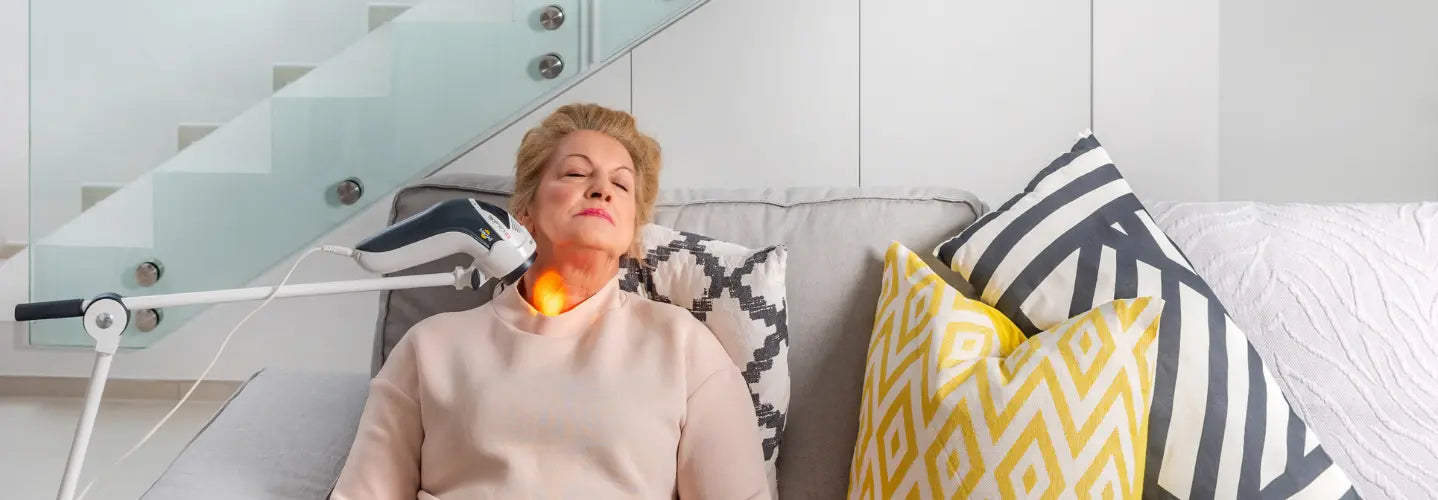
Our BIOPTRON MedAll is a useful example because there is more to assess than a classification label. MedAll is a Swiss-made, certified Class IIa medical device produced by BIOPTRON AG. It is designed for targeted use at home as well as in professional settings.
Its current intended uses include wound care, pain treatment, dermatological disorders and skin problems, paediatric indications and seasonal affective disorders. That gives you something much more specific to examine than the words Class IIa alone.
What we like about MedAll is that the useful information does not stop at the class label. You can see what the device is intended for, who makes it, how the light is delivered and how to use it consistently.
MedAll also differs from a standard red-only LED panel. It uses BIOPTRON Hyperlight, which is polarised, polychromatic light without UV. If you want to understand that technology in more detail, you can read our BIOPTRON Hyperlight therapy overview.
The operating information is also concrete. We publish a wavelength range of 480 to 3400 nm, polarisation greater than 95% across 590 to 1550 nm, average power density of 40 mW/cm² and average light energy of 2.4 J/cm² per minute. The filter diameter is about 5 cm, and MedAll has a built-in digital timer.
For use, our current guidance includes positioning the light at about 90 degrees to the area, keeping approximately 10 cm distance and following the recommended session guidance for the intended use. MedAll comes with a five-year warranty on most parts, with two years on the bulb and fan, and we provide local NZ support.
If you want to look beyond specifications, you can also explore our BIOPTRON studies and scientific reference list and compare MedAll with the wider BIOPTRON Hyperlight range.
Class IIa and outcome claims are not the same thing
This is the distinction we think is worth keeping in mind whenever you see a medical-device claim online.
Class IIa medical device is one fact. A claim that the device will produce a specific medical outcome is another fact.
The second claim does not become true simply because the first one is present. A specific therapeutic claim still needs to fit the device's intended purpose and have appropriate substantiation behind it.
That is why we do not believe Class IIa should be used as a shortcut for claims such as guaranteed results, universal effectiveness or better outcomes than another risk class. Device status and outcome promises are different things.
This is also a useful way to think about searches for medical grade red light therapy devices NZ. The phrase medical grade can sound broad and impressive, but for this article the narrower question is more useful: what does the stated Class IIa status tell you, and what does the exact intended purpose allow you to assess next?
Overseas regulatory terms can muddy the picture
New Zealand search results can include products talking about Australian TGA Class IIa registration, US FDA terminology or European certification language. Those terms may be relevant in their own regulatory systems, but they should not automatically be treated as interchangeable with New Zealand requirements.
If you are buying in New Zealand, understand what the claim means here. A foreign registration term does not turn WAND notification into Medsafe approval, and an overseas classification does not remove the need to look at the device's intended purpose and the claims being made in the NZ market.
Why we think MedAll deserves a closer look
We believe BIOPTRON MedAll deserves serious consideration because you can look beyond its Class IIa positioning and examine a much fuller device story.
You can identify the manufacturer. You can see that it is Swiss-made. You can review a defined intended-use portfolio. You can see how the light is produced, the published wavelength and polarisation information, measurable energy output, positioning guidance, timer, filter size, warranty information and local support.
That transparency gives you more to assess than a badge on its own. It does not mean MedAll is suitable for every person or every condition, and Class IIa does not prove that every person will get the same result. It does mean you have specific information to work with when deciding whether the device fits what you are looking for.
If you are dealing with a medical condition, persistent symptoms, medication, pregnancy, a child, or questions about your personal suitability, speak with an appropriate healthcare professional. If your question is about choosing a BIOPTRON model or understanding how MedAll is used, our NZ team can help through a free BIOPTRON consultation.
Common questions about Class IIa light therapy devices in NZ
What does Class IIa mean for a light therapy device in New Zealand?
Class IIa is a medical-device risk classification. Under New Zealand rules, an active therapeutic device intended to administer energy to a patient, or exchange energy to or from a patient, is Class IIa unless a higher-risk rule applies. It is not a quality score or a promise of better results.
Is a Class IIa device approved by Medsafe?
No. Medsafe states that WAND is a notification system, not an approval system. WAND notification does not mean Medsafe has assessed or endorsed a device's quality, safety, efficacy or performance.
Is Class IIa better than Class I?
Not in a simple better-product sense. The classes reflect regulatory risk under the device classification rules. A higher class should not be treated as a consumer quality ranking or proof of stronger performance.
Does Class IIa prove a red light therapy device works?
No. Class IIa does not by itself prove efficacy or guarantee an outcome. A specific therapeutic claim still needs to fit the device's intended purpose and have appropriate substantiation. BIOPTRON MedAll also should not be confused with a standard red-only LED device because it uses polarised, polychromatic Hyperlight without UV.
What is WAND and can the public search it?
WAND is New Zealand's Web Assisted Notification of Devices database for medical devices supplied in New Zealand. It is not an approval system, and current NZ guidance says it is not accessible to the public.
Why does intended purpose matter when checking a device claim?
Intended purpose tells you what the medical device is represented to be used for. In New Zealand, therapeutic purpose claims for a medical device should be in line with that intended purpose and be supported by appropriate substantiation.
Is BIOPTRON MedAll a Class IIa medical device?
Yes. BIOPTRON MedAll is a certified Class IIa medical device. It is Swiss-made by BIOPTRON AG and uses polarised, polychromatic Hyperlight without UV.
Can a Class IIa light therapy device be used at home?
Some can, depending on the device and its instructions. BIOPTRON MedAll is designed for convenient targeted use at home as well as in professional settings. Follow the device instructions and seek professional advice when personal medical circumstances make that appropriate.
Is an Australian TGA Class IIa registration the same as NZ WAND notification?
No. Australia and New Zealand have different regulatory systems and terminology. An Australian TGA Class IIa registration should not be described as the same thing as New Zealand WAND notification or as Medsafe approval.


